
Body fat
13
%muscle definition visible, abs softer, face fully sharp
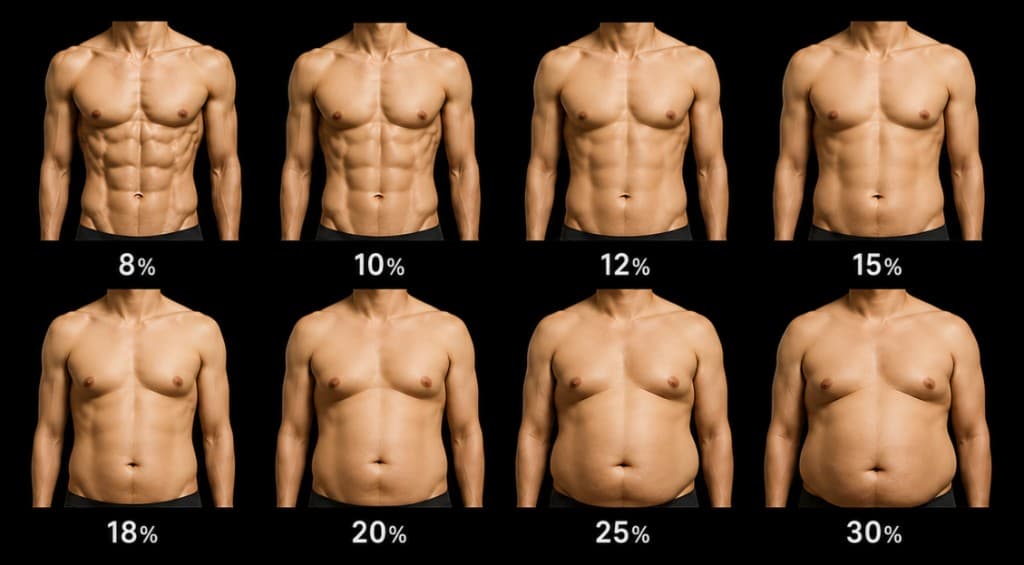
Male body-fat reference panel (8 brackets)
What 13% body fat actually looks like (face + frame)
13% is the most replicable + sustainable band for serious men with jobs. Closest reference panel: ~12%. Abs are visible relaxed but not sharply defined; the V-taper reads clearly through a fitted t-shirt; the face has fully cleared the submental fat layer that softens the jawline at higher percentages. In our test data this band scores within 1-2 points on the perceived axis of 10% on most face/body composite reads — meaning the marginal cost of going lower is rarely worth it for non-athletes.
What the discourse says vs. what the data says
13% is often dismissed as 'not lean enough' by gym discourse. The first-impression data flatly contradicts this. The face at 13% is essentially identical to the face at 10-11% (both are below the submental-fat threshold); the body looks slightly softer in shirtless contexts but nearly identical clothed. Most of the perceived attractiveness signal lives in face + V-taper legibility, both of which are fully active at this band.
The highest-leverage move at 13% body fat
At 13% the question shifts from 'how lean do I need to be' to 'is my upper body wide enough'. Specifically: shoulder width and upper-back thickness determine whether 13% reads as 'athletic' or as 'slim and somewhat trained'. The first reads markedly more attractive in clothed photos. If your shoulder-to-waist ratio is below ~1.4×, that's your single biggest lever — bigger than dropping 3 more body-fat points.
Want your full perceived-attractiveness read at this body fat?
About a minute. The AI combines your current body fat × face × height × outfit and writes the actual perceived first-impression score — plus your ceiling and a 7/30/90-day plan to climb.
Nearby body-fat percentages
Also see height data
Body fat is only half of the equation — the same body fat reads very differently across heights. See where your height sits in the male distribution.
Go to height index →